Current Friction
- Websites, apps and portals behave inconsistently
- Customer information is disconnected
- Teams depend on manual handoffs

We create connected web, mobile, portal and commerce platforms that bring together customers, employees, partners and business systems through one cohesive digital experience.
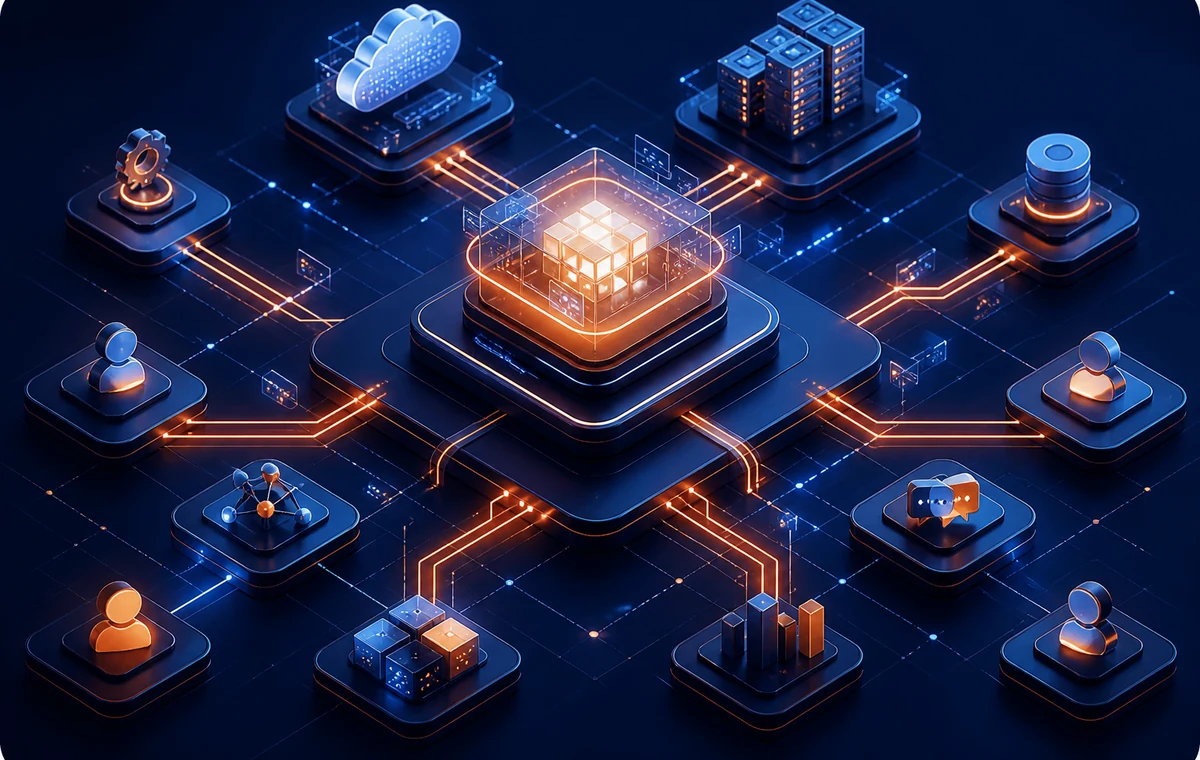
Modern organizations often need more than an isolated website or mobile application. Customers expect consistent experiences across channels, employees need secure access to information and partners require efficient ways to interact with the business.
Continuum Digital designs and develops digital platforms that connect these experiences with the underlying systems that power the organization. From customer portals and mobile applications to eCommerce ecosystems and internal platforms, we create flexible architectures that can evolve as services, audiences and operational needs grow.
Connected self-service experiences.
Purpose-built web applications.
Connected mobile experiences.
Commerce journeys and integrations.
Manageable, consistent experiences.
Secure operational tools.
Connect enterprise systems.
Improve established platforms.
Consistent service experiences.
Secure access to work.
Efficient collaboration.
Centralized management.
Solution delivery aligned with construction workflows, users and operational priorities.
Solution delivery aligned with manufacturing workflows, users and operational priorities.
Solution delivery aligned with healthcare workflows, users and operational priorities.
Solution delivery aligned with retail & ecommerce workflows, users and operational priorities.
Solution delivery aligned with smart home & building management workflows, users and operational priorities.
Experience design, platform engineering and integration create cohesive, maintainable digital experiences.
Align priorities, architecture and implementation around measurable needs.
A digital-platform conversation is useful when customers, employees or partners move through disconnected websites, portals, mobile applications and manual processes. Organizations may have strong individual tools but still struggle with inconsistent experiences, duplicate information, difficult administration or integrations that cannot support new services. We begin by understanding the audiences the platform must serve and the work each audience needs to complete.
During discovery, we can review current websites and applications, authenticated areas, content-management tools, commerce capabilities, mobile experiences and the systems that hold customer or operational data. This helps distinguish a presentation problem from a deeper architecture or workflow issue. It also reveals which capabilities should be shared and which require distinct permissions, journeys or service levels.
Digital platform development depends on thoughtful system integration. We examine ERP, CRM, eCommerce, identity, payment, content and third-party services, including data ownership and synchronization. Performance, security, accessibility, privacy and administration are treated as platform requirements rather than tasks postponed until launch. The discussion also considers how content and functionality will be governed after delivery.
Continuum Digital usually recommends a phased plan based on audience value and technical dependencies. A first phase might establish common architecture, modernize one high-priority journey or connect a portal with a core business system. Later releases can extend mobile access, self-service, commerce or partner capabilities while preserving the platform foundation.
The intended outcome is an scalable digital platform that provides consistent experiences, improves self-service, reduces manual handoffs and makes future enhancements easier to manage. We do not begin by prescribing a framework. The next logical step is a structured workshop to map audiences, journeys, content, integrations and operating responsibilities, then identify a realistic first release with clear success measures and a roadmap for continued growth.
Stage 1 of delivery.
Stage 2 of delivery.
Stage 3 of delivery.
Stage 4 of delivery.
Stage 5 of delivery.
Stage 6 of delivery.
Stage 7 of delivery.
Continuum Digital work
Unified HR and finance platform reference.
Case-study link not publishedContinuum Digital work
Equipment-rental digital platform reference.
Case-study link not publishedContinuum Digital work
Building and facility platform reference.
Case-study link not publishedA digital platform is a connected set of experiences, services, data and integrations that supports interactions between an organization and its audiences. It can include web applications, mobile apps, portals, commerce, content and administration capabilities.
A website often focuses on information and marketing journeys. A platform typically includes authenticated experiences, workflows, transactions, shared data, integrations and administrative tools that support ongoing operations.
Yes. Role-based architecture can provide distinct journeys and permissions for different audiences while sharing approved services, data and administration capabilities.
Yes, where supported interfaces and security controls are available. Integration planning defines data ownership, synchronization, error handling and the experience across connected systems.
Yes. The right channel mix depends on user needs, device context and business goals. Shared APIs and design patterns can support cohesive web and mobile experiences.
We define modular architecture, performance expectations, integration boundaries, content governance, security and a prioritized roadmap so future capabilities can be introduced responsibly.

Start with a focused conversation about the business outcome and the practical path forward.
Talk to Our Team